Water-Soluble Membrane Proteins
Breaking the hydrophobicity barrier—re-engineering glutamate, monoamine, and olfactory receptors via QTY and reverse-QTY codes to survive outside the lipid bilayer.
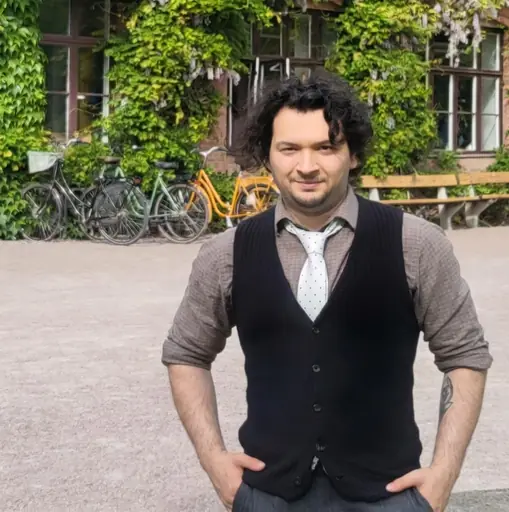
I am Alper Karagöl, MD — physician-scientist and MIT Novo Nordisk Postdoctoral Fellow at the MIT Laboratory for Translational Engineering. I liberate hydrophobic receptors into water, decode evolutionary stress fields inside human proteins, and engineer molecularly programmable therapeutics across neurology, immunology, and oncology.
 MIT (L4TE & Media Lab)
 Broad Institute Ecosystem
Harvard Medical School · BIDMC
University College London
King's College London
Istanbul University (MD)
What if insoluble neural receptors didn’t need a cell membrane to exist? By replacing hydrophobic side chains with polar geometric twins through the QTY code, we dissolve transmembrane machinery straight into water—without erasing its native fold.
Breaking the hydrophobicity barrier—re-engineering glutamate, monoamine, and olfactory receptors via QTY and reverse-QTY codes to survive outside the lipid bilayer.
Treating genomes as dynamical systems—mapping directional variant tension, co-evolutionary stress fields, and game-theoretic equilibria across protein families.
Mining the human dark proteome for short splice variants that selectively jam pathological oligomerization across neuronal transporters, SNARE, and STING pathways.
From silicon-substituted silaproteins and cryogenic azotosome membranes to Fokker–Planck Bayesian deep learning and pH-gated therapeutic delivery.
Curated highlights pulled live from the publication registry—including cover articles in Pharmaceutical Research, Journal of Molecular Evolution, and EJHG.
Translating molecular mechanisms—from pH-responsive proteins to truncated isoform modulators—into defensible therapeutic candidates.
Client-side bioinformatics utilities and visualizers built for instant, zero-friction sequence, variant, and structure analysis.
Notes on structural biophysics, scientific methodology, clinical AI, and life in research.
Analog 35mm photography, light studies, and structural renders—catalogued like a darkroom proof sheet.